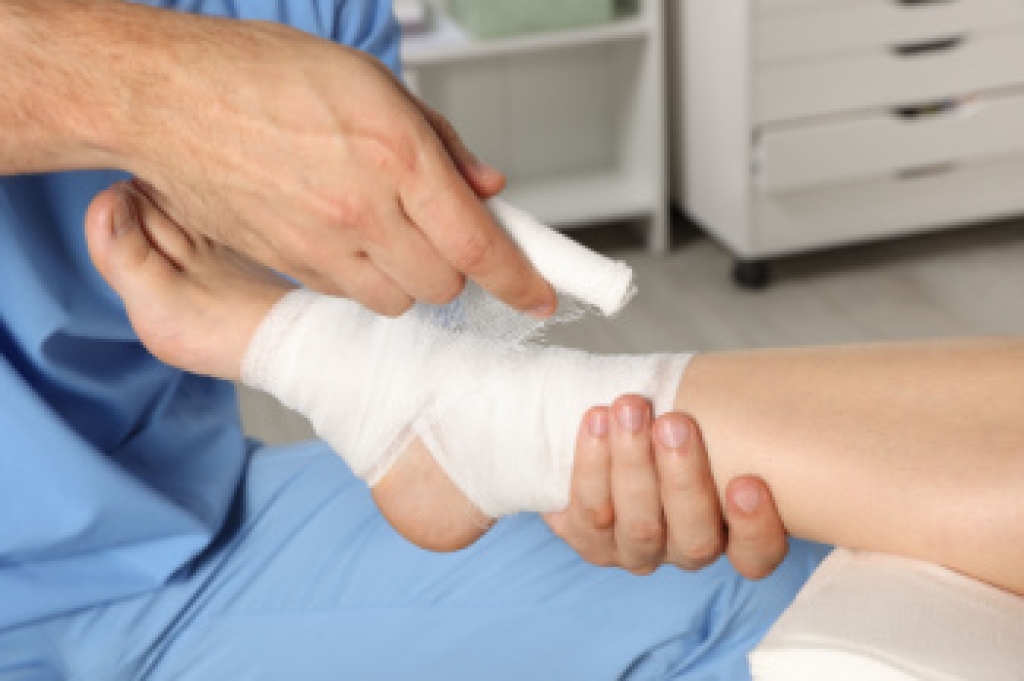
Traumatic wounds in the lower extremities can happen after falls, sports injuries, accidents, or cuts caused by sharp objects. These wounds may affect the skin, muscles, nerves, or deeper tissues in the feet and legs. Many patients experience pain, swelling, bleeding, bruising, or difficulty walking after the injury occurs. Some wounds may appear minor at first but can become serious if infection develops or healing slows down. Proper treatment often depends on the depth and location of the wound, along with the patient’s circulation and overall health. A wound care specialist can clean the injured area, remove damaged tissue, close certain wounds, and help reduce pressure that may interfere with healing. Medical care may also include wound dressings, infection management, and monitoring for complications during recovery. Early treatment can help protect the surrounding tissue and improve healing. If you have a traumatic wound on your foot or leg, it is suggested that you make an appointment with a wound care specialist for treatment.
Caring for Cuts and Abrasions on the Legs and Feet
Cuts and abrasions on the legs and feet are common, but should not be dismissed as insignificant. A cut typically occurs from a sharp object, while an abrasion happens when the skin is rubbed or scraped away. Both types of wounds disrupt the skin barrier and expose the underlying tissue, making proper care important from the start.
The feet and lower legs face constant use throughout the day, which can interfere with healing. Walking, standing, and contact with footwear may place repeated stress on the injured area. This can cause the wound to reopen or delay the formation of new skin. In addition, these areas are more likely to come into contact with dirt and bacteria, increasing the risk of infection.
Effective care begins with gently cleaning the wound to remove debris. Keeping it covered with an appropriate dressing helps protect the area and maintain a stable environment for healing. Avoiding further irritation is equally important, whether that means adjusting footwear or limiting certain activities for a short time.
Healing can vary from person to person. Factors such as circulation, skin condition, and overall health all play a role. For some individuals, even minor wounds may take longer to improve or may become more complicated, if not monitored closely.
If a cut or abrasion becomes more painful, shows signs of infection, or does not heal as expected, call us for an appointment today so a provider can evaluate the area and recommend appropriate treatment.
If you have any questions please feel free to contact our office located in Contact Us . We offer thorough diagnoses and treatment.


